There is a quiet revival happening in kitchens today — not of gadgets or glossy appliances, but of something much older, simpler, and far more enduring.
The cast iron skillet is returning.
After years spent at the back of cupboards, replaced by non-stick pans and lightweight alternatives, cast iron is once again finding its place on stovetops, hanging on walls, and resting on open shelves. And this time, it is not only about nostalgia. It is about cooking better, living more intentionally, and bringing a sense of timeless rusticity into the heart of the home.

More Than a Pan — A Kitchen Treasure
A well-used cast iron skillet tells stories. Its dark, seasoned surface carries the memory of countless meals — eggs gently sizzling on a slow Sunday morning, cornbread baked until golden, chicken thighs crisping alongside rosemary and garlic.
Unlike modern pans that are tucked away in cupboards, cast iron invites itself into view. It is as much a piece of rustic décor as it is a cooking tool. Its honest, utilitarian beauty sits naturally beside wooden chopping boards, linen tea towels, and simple earthenware bowls.
Today, with designs that respect tradition while quietly adapting to modern kitchens, cast iron is finding its place once again.
A Design for Every Kitchen
One of the reasons cast iron has returned to favour is the thoughtful range of designs now available. Whether your kitchen is a compact city space or a generous country room, there is a skillet to suit your way of cooking.
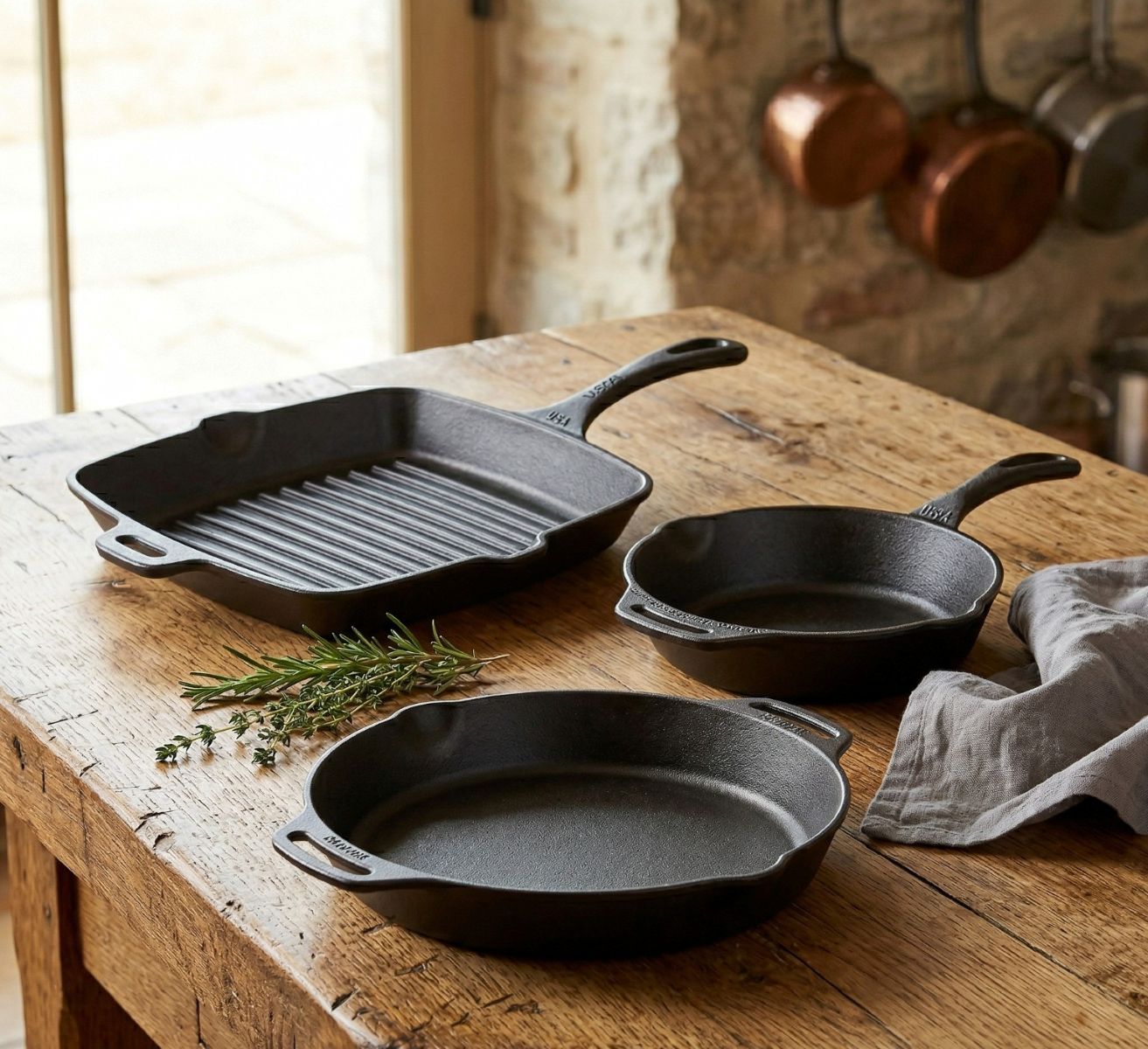
The Long-Handled Skillet
Timeless and practical, the long-handled skillet is the classic choice. The extended handle offers balance and control, keeping your hands safely away from the heat. It is ideal for sautéing vegetables, turning frittatas, and moving easily from hob to table.

The Double-Handled Skillet
For those who enjoy baking as much as frying, the double-handled skillet is a beautiful option. The compact loop handles make lifting easier, even when the pan is full.
More importantly, it fits effortlessly into the oven without catching or awkward positioning. Perfect for baked pasta, rustic pies, or a simple fruit cobbler served straight from the pan.

The Ridged Grill Pan
For those who long for the flavour of outdoor cooking, the ridged grill pan brings that experience indoors. The raised lines create deep, golden grill marks on vegetables, meats, or halloumi, while allowing excess fat to drain away.
It brings a quiet suggestion of the barbecue into everyday cooking — whatever the season.

Why Cast Iron Belongs in a Rustic Interior
In a rustic kitchen, nothing is purely decorative — and nothing needs to be hidden.
A cast iron skillet is honest in the best possible way. Its dark, slightly textured surface, built up over time through seasoning and use, carries a quiet beauty. Hung on a hook or resting against a wall, it becomes part of the room itself.
There is also a practical elegance to cast iron. It moves seamlessly from hob to oven to table, allowing meals to be served exactly as they were cooked. There is something deeply satisfying about placing a warm skillet at the centre of the table — simple, generous, and unpretentious.
How to Choose Your Cast Iron Skillet
If you are new to cast iron, choosing your first piece can feel uncertain. A few simple considerations make it much easier:
Size
A 26–28 cm skillet is the most versatile for everyday use. Smaller pans suit eggs or single portions, while larger ones work well for family meals.
Handle
If you cook on the hob frequently, a long handle is practical. If you bake often, a double-handled design is more convenient in the oven.
Surface
Traditional cast iron develops a natural non-stick surface over time through seasoning. Enamelled versions are easier to maintain but offer a slightly different cooking experience.
Base
Flat bases work well on all hobs, including induction. Grill pans add texture but require a little more care when cleaning.
Weight
Cast iron is naturally heavy. If that feels challenging, consider a slightly smaller size or a lighter modern version.
Caring for Your Cast Iron Skillet
Cast iron asks for very little — but rewards consistency.
Seasoning is essential. A thin layer of oil baked into the surface creates a natural non-stick finish and protects the pan from rust. Most skillets come pre-seasoned, but regular cooking strengthens this layer over time.
Wash gently using warm water and a soft sponge. Harsh detergents are best avoided. For stubborn residue, coarse salt with a little oil works beautifully.
Dry thoroughly after washing. A quick heat on the hob ensures no moisture remains. Finish with a light wipe of oil before storing.
With this simple care, a cast iron skillet will last for decades — often becoming better with every use.
A Living Part of Your Kitchen
The return of cast iron is not simply a trend. It reflects a growing appreciation for slower, more intentional ways of living and cooking.
A cast iron skillet asks for patience. It heats slowly, holds warmth, and rewards time with rich, even flavours. And when the cooking is done, it remains — resting on the stove or hanging quietly on the wall.
A tool, yes — but also a presence.
If you have been considering bringing cast iron into your kitchen, let this be your invitation. Choose a skillet that feels right in your hands. Cook with it often. Let it become part of your daily rhythm.
And leave it where it can be seen — because some things are simply too beautiful to hide.
Perhaps the simplest way to begin is to cook.
Let your skillet warm slowly, add a handful of simple ingredients, and allow the flavours to build — just as they have done for generations.
If you need a place to start, these three one-skillet recipes bring cast iron to life in different ways:
→ Golden pork with a mustard lamb’s lettuce salad

→ Gnocchi with mushrooms, beans, and fresh rocket

→ Creamy chicken and mushroom strips with melted cheese

Simple dishes, cooked slowly, meant to be shared.
Take a moment. Breathe in the season. Let the ritual linger a little longer.
Welcome to HomeGardenFlow.