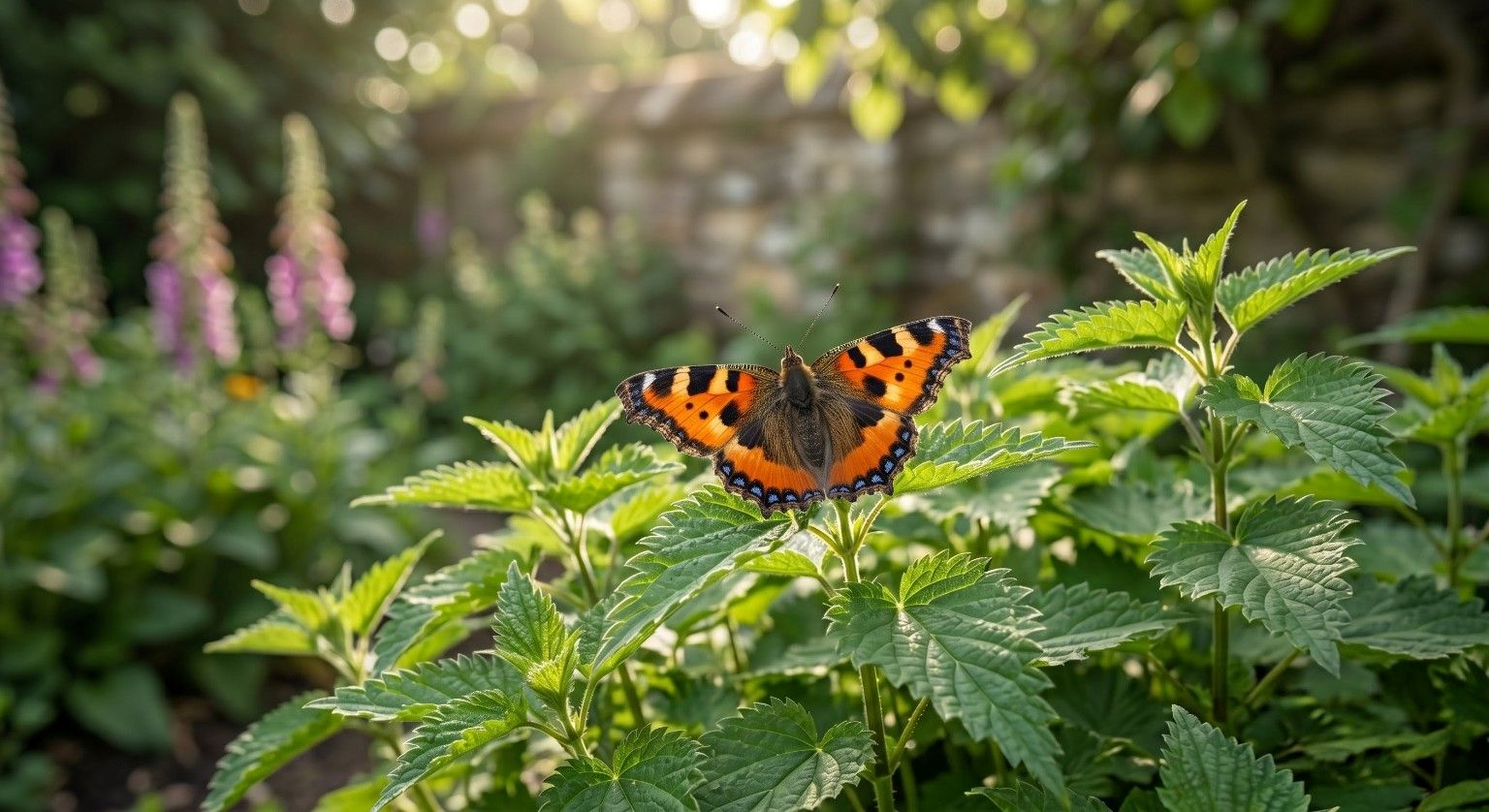
Prickly, persistent, and often unwelcome, the stinging nettle is perhaps the most misunderstood inhabitant across the European countryside. Yet, beyond its defensive exterior lies one of nature’s most generous offerings – a plant that rewards those who take the time to understand its true nature.
For many, a patch of nettles at the edge of a garden is seen as a sign of neglect, a source of scratched ankles and a weed to be eradicated. However, a shift in perspective reveals a different story: a tale of resilience, nourishment, and a deep connection to the rhythms of the season.
When approached with intention rather than frustration, this garden rebel transforms into a cherished spring ally.

A Plant of Contradictions
Stinging nettles (Urtica dioica) are masters of defence. Their leaves and stems are adorned with hollow, silica-tipped hairs that act as minute needles. At the slightest touch, these tips break away, releasing a potent blend of histamine, formic acid, and serotonin. It is a biological masterpiece designed to demand distance, resulting in a lingering, burning sensation.
It is an introduction that feels decidedly hostile.
But here lies the botanical magic: the moment a nettle meets heat – whether through boiling water or the steam of a pan – its sting dissipates entirely. The very leaves that required such careful handling are transformed into a gentle, silky green. It is as if the plant does not seek to cause harm, but simply asks to be approached with the respect and mindfulness that all wild things deserve.
Why Stinging Nettles Deserve a Place in Your Garden
Before reaching for chemical interventions, one might consider the profound ecological value of a controlled, quiet corner dedicated to the nettle. It is a small concession that yields extraordinary returns for the garden’s health.
- A Wildlife Sanctuary: Nettles are the vital life-source for several of Europe’s most beloved butterflies, including the small tortoiseshell, peacock, and comma. To cultivate a nettle patch is to choose to share one’s sanctuary with the natural world, fostering a garden that hums with life.
- Extraordinary Fertiliser: When steeped in water, chopped nettles create a powerful, nitrogen-rich liquid fertiliser. While it possesses a pungent, earthy aroma, the results are undeniable; roses and leafy greens flourish under its care. It is a circular, sustainable way to nourish the soil.
- Compost Activists: Rich in essential minerals, nettles act as a natural activator within the compost heap, accelerating decomposition and enriching the final soil with a depth of nutrients that store-bought alternatives rarely match.
- Soil Wisdom: Nettles are nature’s indicators. They thrive in fertile, nitrogen-rich ground, often marking spots where the earth is most moist and vibrant. To observe where they grow is to begin to truly read the language of the land.

How to Harvest Nettles Safely
To harvest nettles without the sting is to engage in a slow, tactile ritual that connects the gardener to the present moment.
When to pick
The period from late March to early May is the ideal time for gathering. Only the top four to six leaves – the young, tender growth – should be taken. Once the plant begins to flower in midsummer, the leaves become tough and develop gritty particles; spring remains the season of peak vibrancy.
What to wear
Protection is paramount. Thick leather gardening gloves, long sleeves, and sturdy trousers ensure that the harvest remains a peaceful experience. The nettle’s sting is persistent, but it cannot penetrate a well-chosen layer of fabric.
How to pick
Using sharp secateurs, one should snip the tops with precision, allowing them to fall into a trusty wicker basket. Bruising the leaves should be avoided, as it is the damage to the plant that activates its famous defence.
Where to pick
Avoid roadsides, the edges of sprayed fields, and busy footpaths. Choose clean, quiet spots – your own garden, a trusted friend’s land, or a woodland glade away from the bustle of the world.

Beyond the Soup Bowl – Other Ways to Use Nettles
The culinary and therapeutic uses of the nettle extend far beyond the traditional spring soup, offering a variety of ways to bring the wild indoors.
- Nettle Infusions: A handful of dried leaves steeped in boiling water creates a tea that is mineral-rich and slightly grassy. It serves as a grounding spring tonic, awakening the system after the slumber of winter.
- A Timeless Hair Rinse: A cooled, strong infusion used as a final rinse is a traditional secret for adding timeless shine and supporting scalp health. The scent of the rain-washed earth lingers only until the hair is dry.
- Artisanal Pesto: By replacing basil with blanched nettles, one can create a vibrant, bespoke pesto. Combined with garlic, Parmesan, and toasted walnuts, it offers a sophisticated, earthy depth to seasonal pasta dishes.
- Nettle Cordage: In the later months, the tough fibres within the stems can be stripped and twisted into natural string. It is a slow, meditative craft that turns a “weed” into a functional piece of garden twine.
A Note of Mindfulness
While the nettle is a gift, it must be handled with knowledge. Nettles should never be consumed raw, and flowering plants should be avoided to prevent irritation. For those pregnant or on specific medications, professional advice should always be sought before incorporating wild greens into a regular diet.
A New Way to See an Old Friend
The stinging nettle is not a nuisance to be conquered, but a testament to the generosity of the natural world. It asks for a moment of pause – a requirement to glove up, slow down, and approach with a clear intention.
In return, it feeds the butterflies, enriches the earth, and nourishes the body. It is the behaviour of a plant that understands its own worth and plays a vital role in the tapestry of a European garden.
This spring, when the first green shoots appear, perhaps the strimmer can stay in the shed. By bending down and harvesting with care, one might just find that the garden’s greatest rebel is actually its most devoted ally.
Simple Ways to Use Nettles in the Kitchen
If the nettle has sparked your curiosity, this is a lovely place to begin.
A warm bowl of simple nettle soup is perhaps the gentlest introduction – soft, nourishing, and ready in under half an hour.
Or, if you’re in the mood for something a little more special, the nettle & feta filo spiral brings crisp texture and bright spring flavour to the table.
Both recipes celebrate the same quiet transformation:
a wild, prickly plant becoming something comforting, generous, and deeply seasonal.
Take a moment. Breathe in the season. Let the ritual linger a little longer.
Welcome to HomeGardenFlow.