→ Jump to Recipe
There are some flavours that announce the arrival of spring more clearly than others. Sorrel is undoubtedly one of them. Its bright, lemony tang – neither quite herb nor quite citrus – gently wakes up the palate after the heavier, comforting foods of winter.
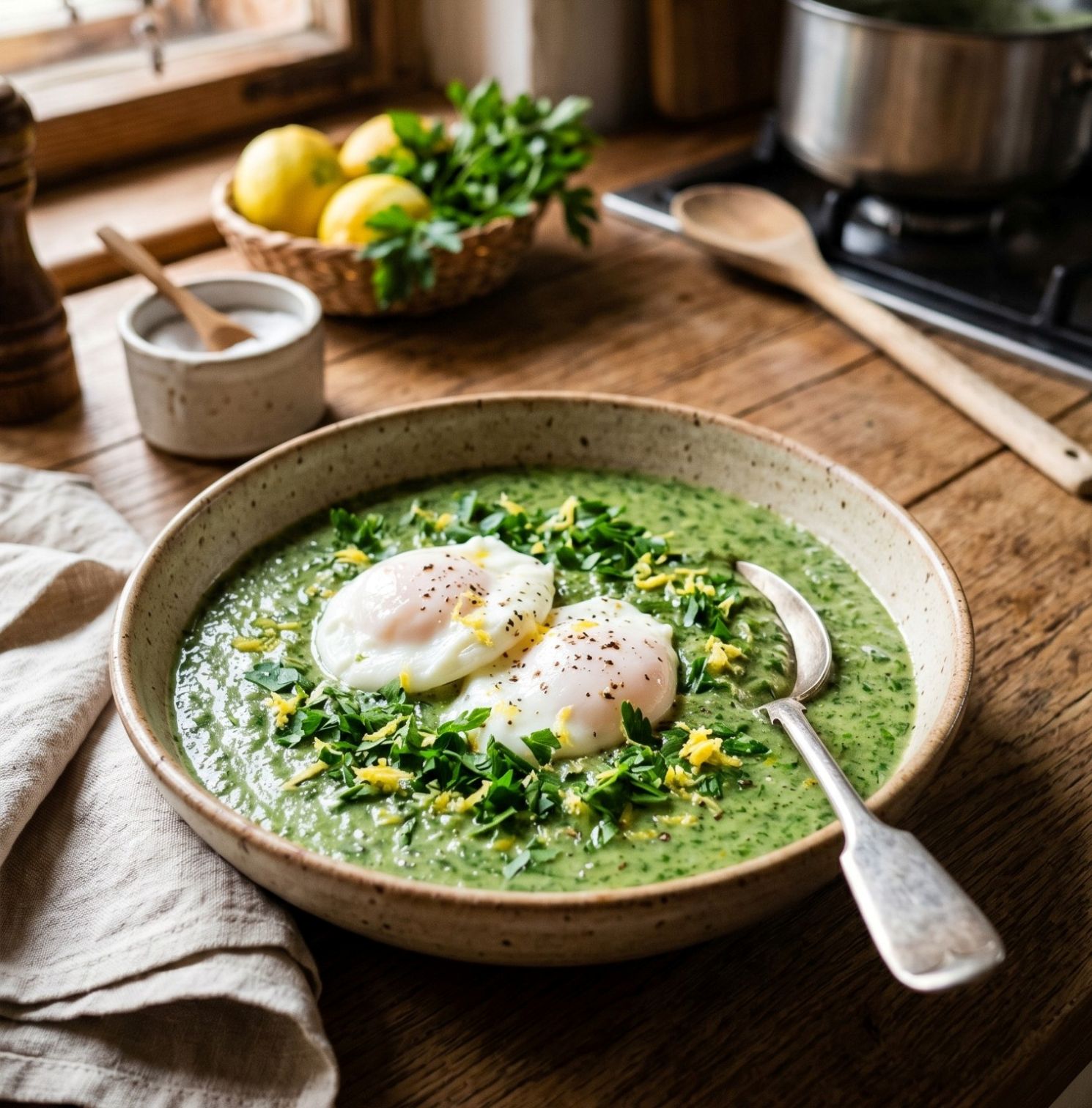
This creamed sorrel with poached eggs is a gentle, nourishing dish that comes together in under half an hour. The fresh leaves are cooked down with soft onion and garlic, then puréed with water-soaked bread – a traditional, brilliant trick for a naturally silken thickness – before being finished with a swirl of rich cream. Served in a shallow bowl with soft, golden poached eggs, a sprinkle of fresh parsley, and a touch of grated lemon zest, it is a beautiful celebration of the season.
It is light yet deeply satisfying, wonderfully tangy yet comforting – an effortless invitation to slow down and savour the moment.

How It Comes Together
The journey begins with the aromatic base. Finely chopped onion and garlic are gently cooked in oil until translucent and fragrant. Fresh sorrel is then added to the pot; it will seem like an overwhelming mountain of green at first, but it wilts down dramatically within minutes, melting into a beautiful olive hue.
Once the sorrel has collapsed, double cream and vegetable stock are poured in. A delicate touch of sugar or honey beautifully balances the sorrel’s natural acidity, whilst fresh lemon juice elevates the brightness of the dish.
Then comes the traditional secret: two white bread rolls are soaked in water, squeezed dry, and stirred into the pot. This time-honoured technique thickens and gives an exquisite body to the creamed sorrel without the need for flour. The mixture is blended until completely smooth and velvety, then enriched with unsalted butter and a handful of fresh parsley.
Meanwhile, the poached eggs are prepared. Water is brought to a gentle simmer with salt and a splash of vinegar to help the whites set neatly. Each egg is gently slipped into the shimmering water. After a few quiet minutes, they are lifted out, beautifully soft.
The creamed sorrel is ladled into shallow bowls, topped with the warm poached eggs, and finished with lemon zest and the remaining parsley. As you sit down to eat, the warm, golden yolk mingles with the tangy, vibrant green base – a truly wonderful combination.
From the Inside Out
Sorrel is as nutritious as it is delicious. It is naturally rich in vitamin C, vitamin A, and magnesium. The traditional bread-and-cream base provides a gentle energy, whilst the poached eggs offer high-quality protein and vitamin D.
Enhanced with fresh lemon, this comforting meal is naturally vegetarian and celebrates the simplicity of wholesome, garden-inspired ingredients. Because it relies on soaked bread rather than a heavy flour roux, the texture remains wonderfully light, leaving you feeling refreshed and nourished.
Creamed Sorrel with Poached Eggs Recipe
Ingredients
Serves 4
For the creamed sorrel:
- 50 ml vegetable oil (such as sunflower or rapeseed oil)
- 1 onion, finely chopped
- 3 garlic cloves, finely chopped
- 300 g fresh sorrel (or 500 g frozen sorrel)
- 200 ml double cream
- 200 ml vegetable stock
- 1 tsp sugar or honey
- Juice of 1 lemon
- Salt and freshly ground black pepper, to taste
- 2 white bread rolls
- 50 g unsalted butter
- 1 small bunch fresh parsley, finely chopped (divided)
For the poached eggs:
- 1 tsp salt
- 2 tbsp white vinegar (or cider vinegar)
- 8 large free-range eggs
For the finish:
- Zest of 1 lemon, finely grated
- The remaining chopped parsley
Method
- Soak the bread:
Place the white bread rolls in a small bowl and cover with cold water. Leave to soak for 5–10 minutes, then squeeze out as much water as possible. Set aside.
- Sauté the aromatics:
In a large, non-reactive pot, heat the oil over medium heat. Add the chopped onion and garlic, cooking gently for 3–4 minutes until soft, sweet, and translucent.
- Wilt the sorrel:
Add the fresh sorrel to the pot. Cover with a lid and cook for 3–4 minutes, stirring occasionally, until the leaves have completely wilted. (If using frozen sorrel, add it directly and cook for 5–6 minutes).
- Simmer the base:
Pour in the double cream and vegetable stock. Stir in the sugar or honey, lemon juice, salt, and pepper, bringing the liquid to a gentle simmer.
- Incorporate the bread:
Tear the squeezed bread rolls into small pieces and add them to the pot, stirring well to combine.
- Blend until velvety:
Using a hand blender, purée the mixture until completely smooth and elegant in texture. Stir in half the chopped parsley and the unsalted butter. Taste and adjust the seasoning if desired, then keep warm over a very low heat.
- Poach the eggs:
Fill a deep pan with water (about 5–6 cm deep). Add the salt and vinegar, bringing it to a bare simmer where small bubbles just hug the bottom of the pan. Crack each egg into a ramekin. Create a gentle whirlpool in the water with a spoon, and softly slip the egg into the centre. Poach for 5–6 minutes until the whites are set but the yolks remain beautifully soft. Remove with a slotted spoon and drain briefly on kitchen paper.
- Present and serve:
Ladle the warm, velvety sorrel stew into shallow bowls. Nestle two poached eggs into the centre of each bowl. Garnish with the remaining parsley and a scatter of grated lemon zest. Serve immediately.

Kitchen Notes
- Fresh vs. Frozen: Fresh sorrel offers the brightest, most nuanced flavour. However, frozen sorrel is a wonderful year-round alternative. If using frozen, taste the base before adding the extra lemon juice, as frozen varieties can sometimes carry a sharper profile.
- The Bread Technique: This traditional method creates an incredibly smooth finish without the risk of lumps or the floury taste of a standard roux. It is the key to the dish’s unique, velvety character.
- The Secret to Poaching: Always use the freshest eggs available, as their whites hold together beautifully. While the vinegar helps the shape, it will not affect the delicate flavour of the egg.
- Temperature Control: To protect the texture, reheat the dish very gently. Avoid letting it come to a rolling boil once the cream and butter have been incorporated, as this can cause the delicate sauce to split.
Frequently Asked Questions
Can I use a different green instead of sorrel?
Yes, though the distinctive flavour profile will shift. Young spinach or Swiss chard make lovely substitutes, but you will need to increase the amount of fresh lemon juice to replicate sorrel’s signature, bright tang.
Can I make this dairy-free?
In deed. Simply replace the double cream with a premium oat cream, and use a plant-based butter alternative or a drizzle of cold-pressed olive oil.
Can I freeze the sorrel stew?
For the best results, freeze the puréed base before adding the fresh cream and butter. When ready to enjoy, thaw, warm gently, and blend in the fresh dairy to restore its silken texture.
Why has my sorrel lost its bright green colour?
Sorrel is delicate and can discolour if overcooked or if it comes into contact with reactive metals like aluminium. To preserve the beautiful hue, use a stainless steel or enamelled cast-iron pot, and keep the cooking time brief.
What else can I serve alongside this?
It pairs beautifully with warm, buttered new potatoes tossed in fresh dill, a crisp green salad, or a thick slice of artisanal, toasted sourdough rubbed with a clove of garlic.
A Taste of Spring in a Bowl
This creamed sorrel is the kind of dish that feels like a quiet celebration – of the very first fresh greens of the year, of mindful cooking, and of the simple, comforting pleasure of breaking a soft-poached egg into a warm, vibrant bowl.
To elevate this experience into something truly extraordinary, pair it with a thick slice of warm, homemade Herb & Onion Plaited Bread.

The sweet, caramelised notes of the onions and the soft, tear-and-share texture of the loaf are the perfect companion for wiping the bowl clean.
Take a moment. Breathe in the season. Let the ritual linger a little longer.
Welcome to HomeGardenFlow.