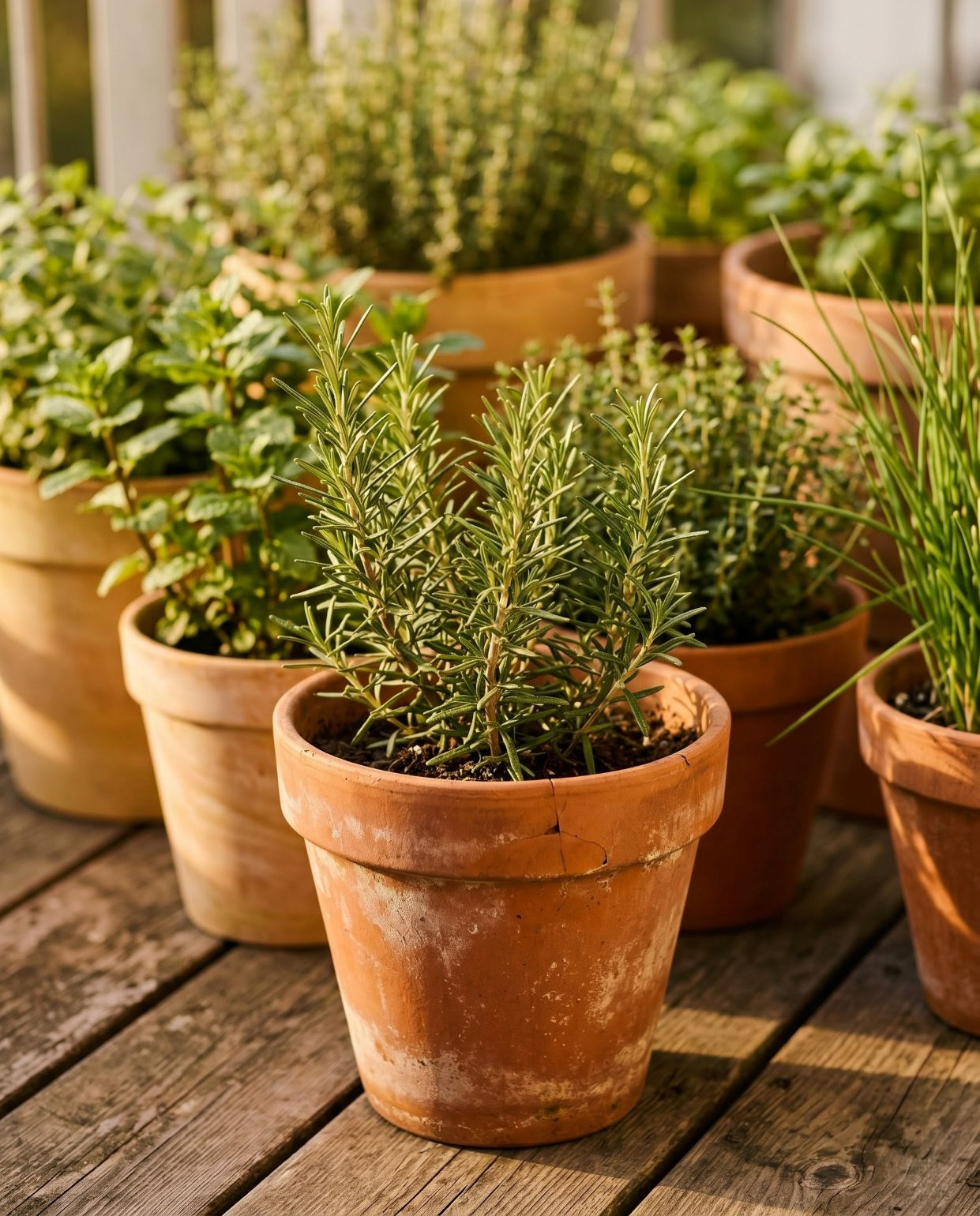
There is something quietly magical about stepping onto a balcony, scissors in hand, and snipping fresh herbs for tonight’s dinner. No muddy boots, no vast vegetable patch – just a few pots, a little sunlight, and the slow satisfaction of growing your own.

For city dwellers, balcony herbs are one of the easiest and most rewarding ways to bring the garden to the kitchen. Even a small space – a windowsill, a railing, a single shelf – can become a living larder.
Why Herbs?
Herbs ask for very little, yet give so much in return. Unlike demanding vegetables that need deep soil and constant feeding, most herbs are quite happy in a medium-sized pot with decent light. They grow generously, recover quickly from a trim, and fill the air with fragrance every time you brush past them.
And because you only ever pick what you need, there is no waste – just fresh flavour, exactly when you want it.
Five Herbs Perfect for a Balcony

You do not need a long list to start. These five are forgiving, useful in the kitchen, and well suited to container life.
Rosemary
A small rosemary bush in a terracotta pot brings both fragrance and structure to your balcony. It loves full sun and needs very little water once established – in fact, it prefers to dry out slightly between waterings. Keep it in a larger pot (at least 20 cm deep) and trim it back after flowering to keep it bushy. A few sprigs tucked under roast potatoes or into bread dough work wonders.
Thyme
This low-growing, trailing herb is perfect for railing planters or the edge of a larger pot. It adores sunshine and tolerates neglect better than almost anything else. The tiny leaves pack a surprising amount of flavour – lemon thyme adds a gentle citrus note, while common thyme is a classic partner for mushrooms, eggs and stews. Snip often to encourage fresh growth.
Mint
Mint grows with such enthusiasm that it needs a pot entirely to itself. Never plant mint together with other herbs – it will quietly take over. Choose a container with a saucer to contain its roots, and place it in sun or partial shade. There are many varieties: spearmint for tea, peppermint for a stronger kick, or chocolate mint for something more unusual. Use it in summer salads, cold drinks or simply muddled into boiling water for a fresh infusion.
Chives
Chives are the neatest member of the onion family, forming tidy clumps of grassy leaves that look as good as they taste. They cope well with partial shade and need only moderate watering. Snip the leaves close to the base with scissors, and they will regrow within weeks. The mild onion flavour lifts scrambled eggs, baked potatoes, soft cheese or a simple bowl of soup. In late spring, you can even eat the pretty purple flowers – they taste gently of onion and look lovely scattered over a salad.
Basil
Basil is the summer star. It needs warmth, full sun and regular watering – but the reward is extraordinary. Sweet basil is the classic choice for pesto, tomatoes and pasta, while Greek or bush basil stays more compact and works well in smaller pots. Pinch out the growing tips often to stop it from flowering too soon, because once basil flowers, the leaves turn bitter. Bring it indoors before the first cold nights of autumn, and you might enjoy fresh leaves well into October.
You do not need a grand garden
to taste the difference
homegrown herbs make.
What You Will Need
Getting started is surprisingly simple. Here is the basic kit:
· Pots or containers – at least 15–20 cm deep for most herbs; terracotta breathes well but dries faster, while plastic or glazed pots hold moisture longer.
· Drainage holes – absolutely essential. Herbs hate sitting in water.
· Saucers or trays – to catch drips, especially important on a balcony with neighbours below.
· Good potting mix – use a peat-free, multi-purpose compost. Do not use garden soil; it is too heavy for pots.
· A small trowel – for planting.
· Slow-release fertiliser or liquid feed – herbs do not need much, but a light feed in summer helps.
Step by Step: Planting Your Herb Balcony

- Choose your spot.
Observe your balcony for a few days. Which parts get morning sun? Where is the afternoon shade? Most herbs prefer 5–6 hours of sun, but chives tolerate less.
- Select your pots.
Make sure each pot has a drainage hole. Place a broken piece of old pot or a small stone over the hole to stop soil washing out.
- Fill with compost.
Leave about 2 cm of space below the rim to make watering easier.
- Plant your herbs.
You can start from small nursery plants (fastest and easiest) or from seed (cheaper, more satisfying, but slower). Plant at the same depth they were in their original pot.
- Water gently.
Give them a thorough soak after planting, then let the top of the soil dry slightly before watering again.
- Label them.
It is easy to forget which is which before the leaves show their true shape. A simple wooden stick and a pen work perfectly.
Daily and Weekly Care

Watering is the one thing that needs attention. Pots dry out much faster than garden soil, especially on a sunny, windy balcony. Check daily by touching the soil – if the top centimetre feels dry, water slowly until it runs out of the drainage hole. In high summer, you may need to water once a day or even twice. Basil is thirstiest; rosemary and thyme prefer to stay on the drier side.
Feeding is very light. Herbs grown for their leaves (basil, mint, chives) appreciate a weak liquid feed every 3–4 weeks in summer. Rosemary and thyme are happier with almost no food – too much makes them grow soft and less fragrant.
Pruning and harvesting go hand in hand. The more you snip, the bushier your herbs become. Always cut just above a pair of leaves, never more than one-third of the plant at once. And harvest regularly – if a herb flowers, its flavour often turns bitter.
Growing Through the Seasons

Balcony herbs change with the calendar, and that is part of the quiet beauty.
Spring is for planting. Start chives from seed. Buy small rosemary and thyme plants to settle in before summer heat arrives. Wait until the last frost has passed before putting basil outside.
Summer is abundance. Basil thrives on warmth. Harvest generously. Water twice a day on very hot days. Watch for mint trying to escape its pot.
Autumn is preparation. Bring basil indoors before the first cold nights. Rosemary and thyme stay outside but shelter them from relentless rain.
Winter is rest. Rosemary, thyme, mint and chives go dormant. They need very little water – once a week or less. The leaves may look tired, but life waits in the roots for spring. Basil will not survive winter outdoors unless you keep it on a warm, bright windowsill inside.
Simple Ways to Use What You Grow
A balcony herb garden is not meant to be admired from a distance. It is meant to be used.
· Rosemary sprigs tucked under roast potatoes or into bread dough.
· Thyme leaves scattered over mushrooms or scrambled eggs.
· Mint muddled into tea, or torn through a summer salad with watermelon and feta.
· Chives snipped over soup, baked potatoes or soft cheese.
· Basil leaves torn over tomatoes, blended into pesto, or laid onto a simple margherita pizza just as it comes out of the oven.
A Gentle Final Thought
You do not need a grand garden to taste the difference homegrown herbs make. A single pot of rosemary on a city balcony still carries the scent of rain and sunshine. It still connects your cooking to the slow rhythm of growing things.
Start with two or three from this list – perhaps rosemary and chives, or thyme and mint. Place them where you will see them every day. Water them when the soil feels dry. Snip them often, use them generously, and watch how they grow back stronger each time.
Then enjoy the small ritual of stepping outside, scissors in hand, to bring fresh flavour into your kitchen – just a snip away.

Fresh herbs may be the beginning of a balcony garden, but they are rarely the end. If you have a little extra space, a few strawberry plants can reward you with bowls of sweet summer fruit right outside your door.
Balcony Strawberries – Grow Sweet Berries in Small Spaces
Take a moment. Breathe in the season. Let the ritual linger a little longer.
Welcome to HomeGardenFlow.