→ Jump to Recipe
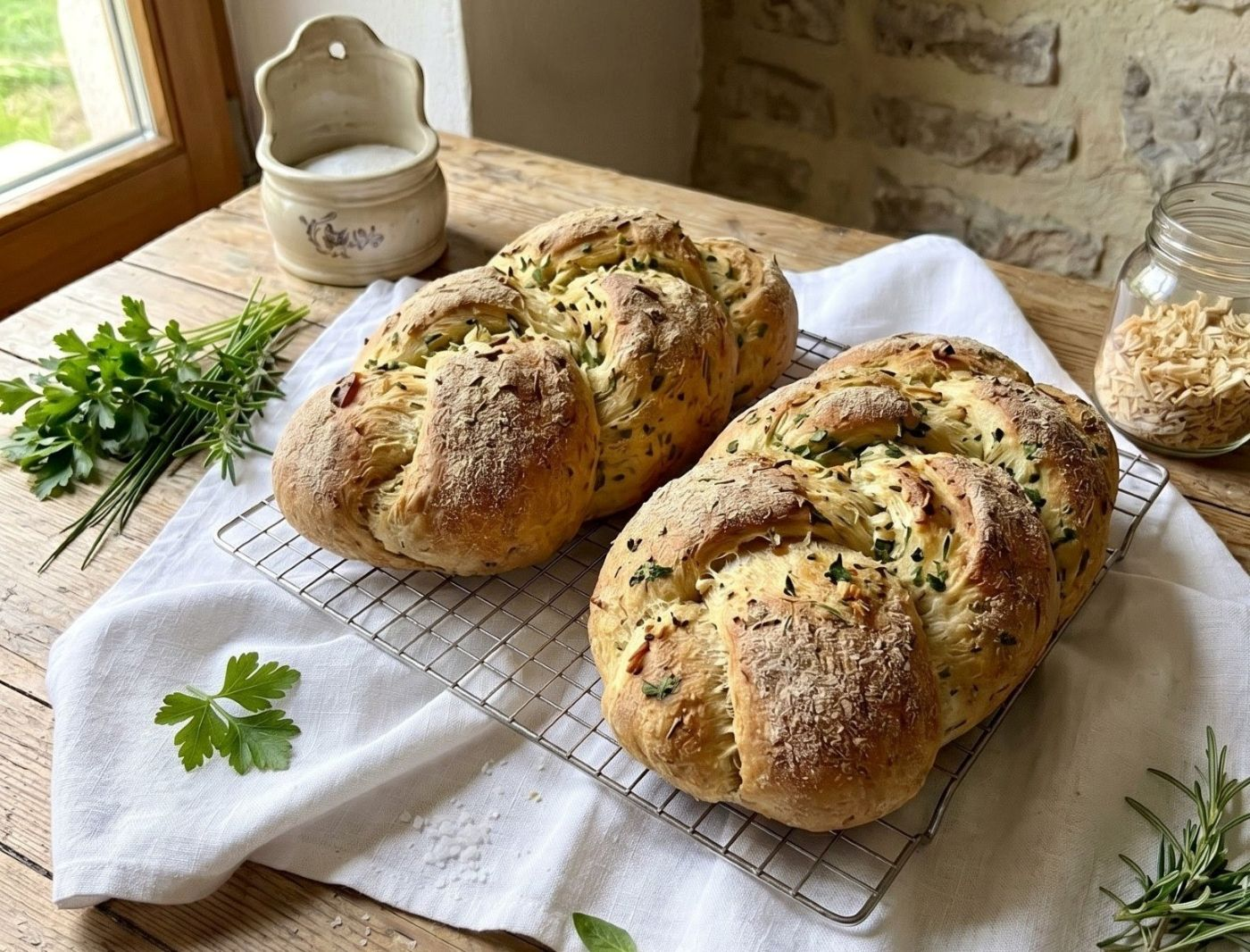
There is something deeply satisfying about baking a loaf that looks as wonderful as it tastes. This herb and onion plaited bread is exactly that – a soft, golden, slightly enriched dough woven into two elegant plaits, each one speckled with parsley, chives, thyme, rosemary, and delicate flakes of dried onion.
The dough is a joy to work with. It comes together with fresh yeast, a touch of caster sugar, melted butter, and evaporated milk, which lends it a tender, almost brioche-like crumb. The savoury herbs and onion balance the richness beautifully, making this loaf equally at home alongside a steaming bowl of soup, a hearty stew, or simply spread with a generous layer of farmhouse butter.
And the plaiting? It looks impressive, but it is surprisingly simple to master. Once you have tried it, you will find yourself returning to this recipe again and again.

How It Comes Together
The process begins with the yeast. Fresh yeast is dissolved in a little lukewarm water, then set aside in a warm, draught‑free spot to wake up and become frothy.
In a large bowl, two types of flour – white and wholemeal – are mixed together. The bran that remains after sifting the wholemeal flour is returned to the bowl; this ensures the loaf retains all its nutty flavour and natural fibre. Freshly chopped herbs (parsley, chives, rosemary, and thyme), dried onion flakes, sugar, salt, and a good grind of black pepper are stirred through.
In a separate jug, warm water, evaporated milk, melted and cooled butter, and a beaten egg are whisked together. This liquid mixture, along with the frothy yeast, is poured into the flour. Everything is stirred until it forms a cohesive, aromatic dough.
The dough is kneaded for five to eight minutes until it becomes smooth, elastic, and a pleasure to handle. It is then divided into six equal pieces, each rolled into a long, supple rope. Three ropes are laid side by side and woven into a plait; the remaining three ropes form a second loaf.
The loaves are placed on a cloth‑lined rack dusted with wholemeal flour, covered loosely with cling film, and left to rise in a warm place for about thirty minutes, until they have doubled in size and feel light to the touch.
Finally, they are carefully slid onto a hot baking sheet dusted with semolina, then baked until deep golden brown. The aroma that fills the kitchen while they bake is the very definition of comfort.
From the Inside Out
This bread is more nourishing than a standard white loaf, thanks to the addition of wholemeal flour. Whole grains provide more fibre, B vitamins, and essential minerals. The fresh herbs contribute subtle antioxidants, while the onion flakes add a gentle savoury depth.
The evaporated milk and butter ensure the crumb remains tender, yet the loaf is never overly heavy – it strikes a perfect balance between an indulgent treat and everyday bread. Because it is savoury rather than sweet, it pairs beautifully with stews, salads, or simply a bowl of cold-pressed olive oil for dipping.
Herb & Onion Plaited Bread Recipe
Ingredients
Makes 2 plaited loaves (about 12 slices each)
For the dough
- 45 g fresh yeast
- 60 ml lukewarm water
- 375 g plain white flour, sifted
- 470 g wholemeal flour, sifted (return the bran left in the sieve to the bowl)
- 2 tbsp fresh mixed herbs, finely chopped (parsley, chives, rosemary, thyme)
- 2 tbsp dried onion flakes
- 1 tbsp caster sugar
- 2 tsp salt
- Freshly ground black pepper, to taste
- 250 ml warm water
- 170 ml evaporated milk
- 125 g unsalted butter, melted and cooled
- 1 egg, lightly beaten
For dusting and baking
- Wholemeal flour, for dusting
- 1 tbsp semolina (or fine cornmeal)
Method
- Activate the yeast
In a small bowl, crumble the fresh yeast into the 60 ml of lukewarm water. Stir gently to dissolve. Leave in a warm, draught‑free place for about 10 minutes, until frothy.
- Mix the dry ingredients
In a large mixing bowl, combine the white flour, wholemeal flour (including the returned bran), chopped fresh herbs, dried onion flakes, sugar, salt, and a generous grind of black pepper. Make a well in the centre.
- Combine the wet ingredients
In a jug, whisk together the warm water (250 ml), evaporated milk, melted and cooled butter, and the beaten egg.
- Bring the dough together
Pour the yeast mixture and the wet ingredients into the well. Stir with a wooden spoon until a rough dough forms.
- Knead the dough
Turn the dough out onto a lightly floured surface. Knead for 5–8 minutes, until the dough is smooth and elastic. Add a little more flour if needed, but aim for a soft, tactile finish.
- Divide and shape into ropes
Cut the dough into 6 equal pieces. Roll each piece into a long rope, about 30–35 cm in length.
- Plait the loaves
Take 3 ropes. Pinch the tops together, then plait them (left over middle, right over middle, repeat). Pinch the ends together and tuck them under slightly. Repeat with the remaining 3 ropes.
- First rise
Place a clean kitchen towel on a wire rack and dust lightly with wholemeal flour. Place the plaited loaves on the towel, leaving space between them. Cover loosely with cling film and leave in a warm place for about 30 minutes, until doubled in size.
- Preheat and prepare the baking sheet
Near the end of the rising time, preheat the oven to 200°C (180°C fan) or Gas Mark 6. Place a heavy baking sheet in the oven to heat up. Once hot, dust the sheet lightly with semolina.
- Bake the loaves
Carefully slide the risen loaves onto the hot baking sheet. Bake for 30–35 minutes, until they are deep golden brown and sound hollow when tapped on the underside.
- Cool
Transfer to a wire rack and allow to cool completely before slicing – the hardest part of the process.

Kitchen Notes
- Fresh yeast – If you cannot find fresh yeast, substitute with 15 g of active dried yeast. Dissolve it in the warm water with a pinch of sugar and let it foam before using.
- Herb choices – Feel free to experiment. While rosemary and thyme are timeless, dill or sage can offer a unique twist.
- Dried onion flakes – These provide a concentrated savoury sweetness without the excess moisture of fresh onions.
- Plaiting – Do not plait too tightly; the dough needs room to expand as it proves and bakes. A relaxed plait yields a more inviting shape.
- Semolina – Dusting the baking sheet with semolina gives the loaves a wonderful, rustic crunch on the base.
Frequently Asked Questions
Can I make this bread without evaporated milk?
Yes. You can replace it with whole milk. The crumb will be slightly less tender, but the result will still be delicious.
Can I use only wholemeal flour?
You can, though the loaf will be significantly denser. The blend of white and wholemeal ensures a beautiful rise while maintaining the benefits of whole grains.
My dough is too sticky – what went wrong?
Flours absorb liquid differently depending on the humidity. Add a little more flour, a tablespoon at a time, until the dough is smooth and manageable.
What should I serve with this bread?
It is exceptional alongside:
- A bowl of our Green Bean & Pork Stew or Simple Nettle Soup.
- Toasted and spread with salted butter or a creamy goat’s cheese.
- Sliced for sandwiches with roast meats and fresh salad.
A Loaf to Share
This herb and onion plaited bread is the sort of bake that invites people to gather round. It is elegant enough for a Sunday luncheon, yet simple enough for a quiet afternoon in the kitchen.
Whether you tear it apart while still warm from the oven or gift a loaf to a neighbour, it carries with it the quiet pride of something made by hand and the timeless warmth of the home.
Loved baking this savoury loaf?
You might also enjoy our Rustic Salami Rye Bread — another hearty homemade loaf filled with rustic flavour and perfect for sharing at the table.

Take a moment. Breathe in the season. Let the ritual linger a little longer.
Welcome to HomeGardenFlow.