→ Jump to Recipe
A Simple Italian-Inspired Supper
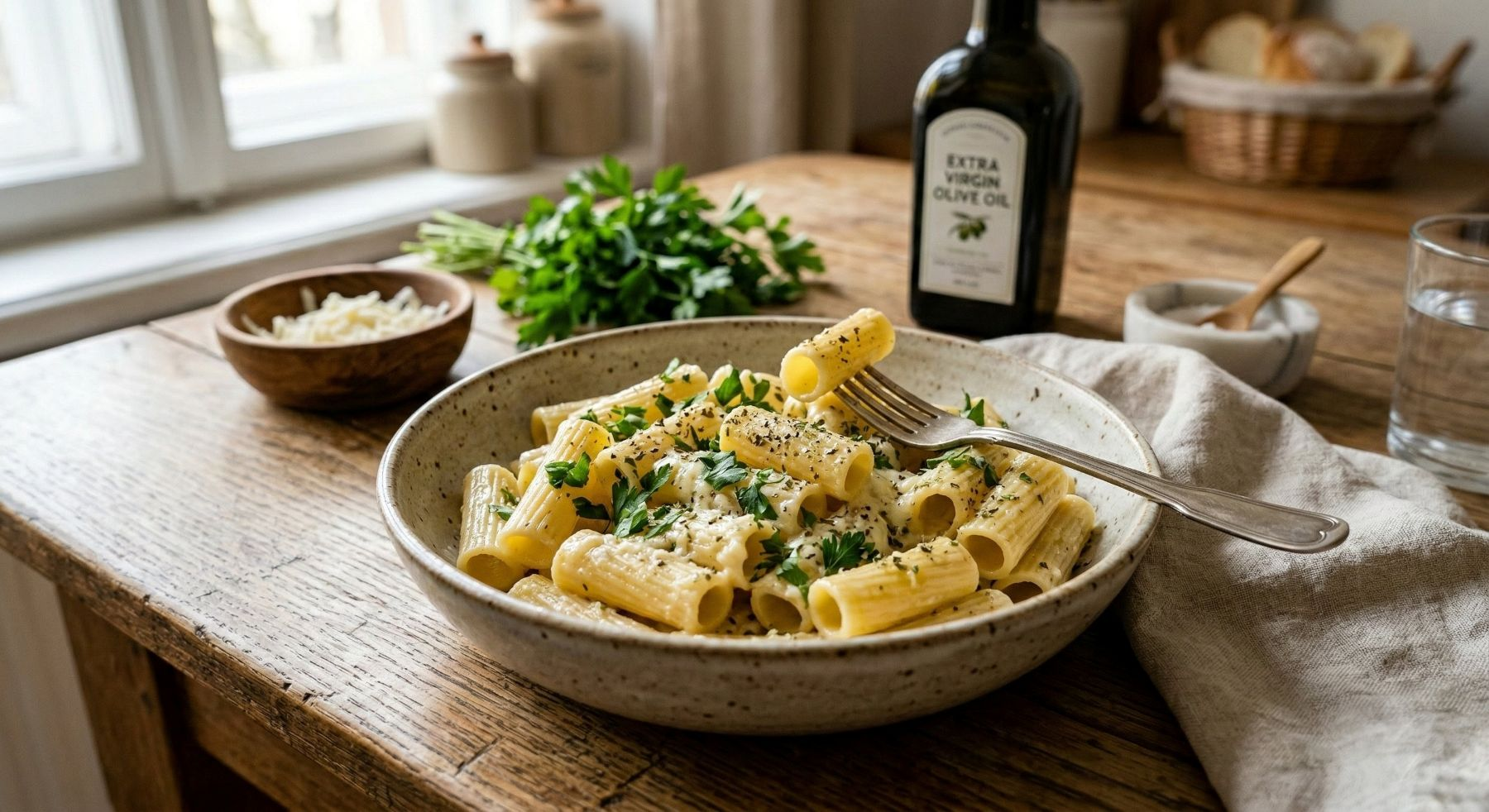
There are evenings when you want something warm and satisfying without spending hours in the kitchen. This rigatoni with goat’s cheese is exactly that kind of meal.
Goat’s cheese brings more than creaminess to this dish — it brings character. Its gentle tang cuts through the richness of the olive oil and coats the rigatoni in a light, silky glaze rather than a heavy sauce. The result feels indulgent, yet surprisingly balanced.
Unlike stronger aged cheeses, firm goat’s cheese melts softly without becoming greasy. It clings to the ridges of the pasta, settling into every groove and hollow. Each bite carries a subtle sharpness that keeps the dish from feeling flat.
It also pairs beautifully with fresh parsley. The brightness of the herbs lifts the natural acidity of the cheese, while a pinch of oregano adds quiet depth in the background. Together, they create complexity from just a handful of ingredients — proof that simplicity, when chosen carefully, is often enough.
It is simple food — but not plain. Honest, rustic and beautifully quick.

How It Comes Together
Begin by bringing a large pot of salted water to a gentle boil, then add the rigatoni and cook until perfectly al dente. The contrast between firm-yet-tender pasta and the creamy sauce is the heart of this dish.
While the pasta cooks, warm a drizzle of extra virgin olive oil in a pan over moderate heat. Let the oil shimmer softly before adding aromatics such as garlic or finely sliced onion — their fragrance will become the quiet backbone of the sauce.
Once the goats’ cheese is crumbled into the warm pan and begins to melt, it will transform into a luxuriously smooth coating. The reserved pasta cooking water helps the cheese and olive oil come together into a satiny sauce that hugs each rigatoni ridge.
From the Inside Out
Goat’s cheese adds more than flavour to this dish — it also brings nourishment.
Goat’s cheese is often easier to digest than many cow’s milk cheeses and provides valuable protein and calcium in a form that feels lighter on the body.
Extra virgin olive oil contributes heart-supportive fats and antioxidants, while fresh parsley offers vitamin C and natural cleansing properties. Even the rigatoni itself — especially when cooked al dente — delivers steady energy without heaviness.
This is not a dish about counting calories. It is about balance: protein, healthy fats, fresh herbs and satisfying carbohydrates working together in quiet harmony.
Food that comforts, yet also sustains.
Rigatoni with Goat’s Cheese and Parsley Recipe
Ingredients
Serves 2–3
- 350 g rigatoni
- Sea salt
- 1 teaspoon olive oil (for the cooking water)
- 175 g hard goat’s cheese, finely grated
- 2 tablespoons extra virgin olive oil
- 4 tablespoons fresh parsley, finely chopped
- A pinch of dried oregano
- Freshly ground black pepper
Method
1. Cook the pasta
Bring a large pot of well-salted water to the boil. Add a teaspoon of olive oil and cook the rigatoni according to the packet instructions until al dente.
2. Combine
Drain the pasta thoroughly while still hot. Return it to the pan and immediately toss with the grated goat’s cheese, extra virgin olive oil, parsley and oregano.
The warmth of the pasta will gently melt the cheese, creating a light, creamy coating rather than a heavy sauce.
3. Season and serve
Finish with freshly ground black pepper. Serve at once, while glossy and warm.
To Serve
- With a simple green salad dressed in lemon and olive oil
- Or alongside roasted cherry tomatoes
- And perhaps a glass of dry white wine
Kitchen Notes
This dish proves how a few good ingredients can create something surprisingly satisfying. The key lies in balance: the gentle tang of goat’s cheese, the brightness of fresh parsley, and the warmth of good olive oil coating the rigatoni.
When cooking the pasta, salt the water generously — it should taste like the sea. Properly seasoned pasta water is one of the simplest ways to build flavour from the very beginning. Before draining the rigatoni, reserve a small cup of the cooking water. A splash of this starchy water helps the goat’s cheese melt smoothly into a light, silky sauce that clings beautifully to the pasta.
Choose a soft, creamy goat’s cheese rather than a very aged one. It melts more easily and creates that delicate, almost velvety texture that defines the dish.
Serve immediately while the pasta is still warm and the cheese is perfectly creamy. A drizzle of extra virgin olive oil and a little extra parsley just before serving brings the whole bowl to life.
Serving Suggestions
This simple rigatoni dish is wonderfully versatile and can be served in many ways depending on the occasion. For a relaxed weekday meal, enjoy it on its own with a drizzle of good extra virgin olive oil and an extra sprinkle of fresh parsley.
If you are serving it as part of a slightly larger meal, a bowl of lightly dressed green salad works beautifully alongside. Peppery rocket or tender lettuce leaves with a squeeze of lemon and olive oil add freshness and balance the creamy goat’s cheese.
Rustic bread is another natural companion. A slice of warm sourdough or farmhouse loaf is perfect for catching the last traces of the silky sauce left on the plate.
For a Mediterranean-inspired table, you could also add a small plate of roasted vegetables — such as courgettes, peppers, or aubergine — finished with herbs and olive oil.
However you serve it, this dish shines most when shared simply, with good ingredients and a little time at the table.
Frequently Asked Questions
Can I use another type of pasta?
Yes. While rigatoni works beautifully because its ridges catch the sauce, other short pasta shapes such as penne, fusilli, or farfalle also work very well.
What type of goat’s cheese should I use?
A soft, fresh goat’s cheese is ideal. It melts easily into the pasta and creates a smooth, creamy coating without becoming heavy.
Can I add vegetables to this dish?
Absolutely. Lightly sautéed courgette, spinach, or roasted cherry tomatoes pair wonderfully with the tangy goat’s cheese and add extra colour and freshness.
How can I make the sauce creamier?
Reserve a little of the pasta cooking water and stir it into the pasta with the cheese. The starch helps emulsify the sauce and creates a silky texture.
Is this dish suitable for a quick weeknight meal?
Very much so. With only a handful of ingredients and minimal preparation, it can be on the table in about twenty minutes — perfect for an effortless but comforting supper.
Take a moment. Breathe in the season. Let the ritual linger a little longer.
Welcome to HomeGardenFlow.